


WikiEXPO Global Expert Interviews Yiannos Ashiotis:How Strong Governance Drives Financial Innovation
WikiEXPO 2026-01-06 17:47As WikiEXPO Dubai concludes successfully, we had the pleasure of interviewing Yiannos Ashiotis, the Group Managing Partner of Pnyx Hill and the Board Chairman of Revolut Digital Assets Europe.
With more than two decades of leadership at the intersection of regulatory strategy, governance, and cross-border financial services, Yiannos has built a distinguished career advising central banks, financial regulators, investment firms, and RegTech innovators. His work spans complex regulatory frameworks—including market entry, digital assets, ESG, AML/CFT, and institutional transformation—and he has led major licensing and advisory projects aligned with global standards such as MiFID II, AIFMD, and PSD2.
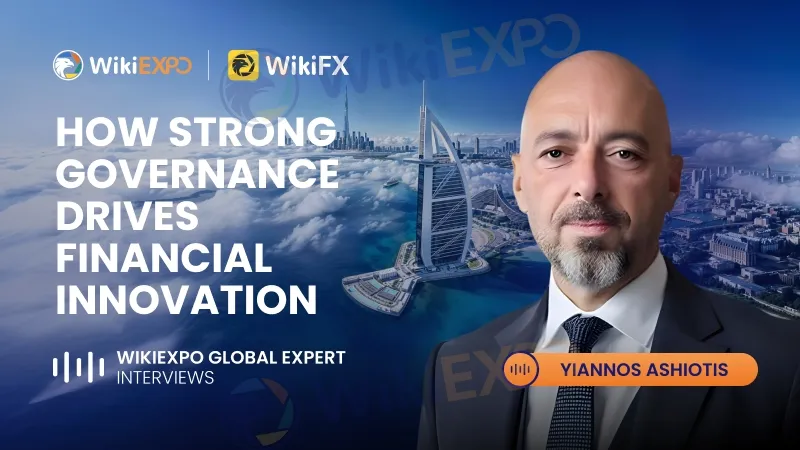
Beyond his advisory roles, Yiannos represents Cyprus as a National Delegate to the International Organization for Standardization (ISO), where he contributes to international standards in corporate governance, sustainable finance, and financial regulation. He also serves as a Council Member of the Chartered Institute for Securities and Investments (CISI) and sits on the Industrial Advisory Board of the University of Limassol, helping align academic programs with evolving industry needs.
Yiannos holds an extensive set of professional credentials—including AICPA (CPA), CAMS, and CFSA—alongside certifications in operational risk, sustainable finance, and ethical artificial intelligence, reflecting both the breadth and depth of his technical expertise.
Widely recognized for his ability to bridge business strategy with regulatory complexity, he is regarded as a trusted voice in global finance. His work helps institutions scale responsibly, navigate regulatory change, and transform governance into a driver of innovation and long-term value.
Part 1: Leadership, Regulation, and the Architecture of Financial Innovation
Q1: You’ve built an impressive career at the intersection of governance, regulatory strategy, and cross-border finance. How did your experience across different regulatory environments shape your approach to financial innovation?
A: My work across the EU, UK, Middle East, and emerging markets taught me that innovation only scales when it’s built on strong governance and regulatory clarity. Each jurisdiction has its own priorities, so I learned to design frameworks that are flexible enough to adapt, yet robust enough to satisfy regulators. This experience shaped my approach: innovate fast, but institutionalize discipline early. That balance is what enables firms to launch, grow, and maintain trust across borders.
Q2: Having advised both regulators and fintech institutions, what do you see as the biggest challenges and opportunities in aligning innovation with compliance—especially around digital assets and ESG finance?
A: The biggest challenge is not innovation versus compliance, but the gap in pace between the two. In digital assets, products often move faster than regulatory interpretation, and problems arise when compliance is treated as an afterthought rather than part of the design.
The opportunity lies in technology itself. Digital assets and ESG finance can significantly enhance transparency, traceability, and oversight—from on-chain auditability to more robust AML and ESG reporting. When governance and controls are embedded early, compliance becomes an enabler of trust and scale, not a barrier to innovation.
Q3: As a board leader at Revolut Digital Assets Europe, how do you view the balance between rapid digital transformation and regulatory oversight in the next 3–5 years?
A: Over the next three to five years, the balance will become more structured and predictable. Regulatory expectations are clearer, and boards are increasingly accountable for governance, risk culture, and long-term strategy.
Strong regulatory frameworks do not slow innovation—they provide the confidence to scale responsibly. The institutions that succeed will be those that move quickly, but with discipline, embedding regulatory alignment into strategy, product design, and execution from the outset.
Q4: From your perspective, how can financial institutions integrate ethical AI and sustainable finance frameworks into their operational and governance models?
A: Practically, it comes down to three things. First, build clear ownership: give AI and sustainability risks defined roles at board and management level, just like you would for compliance or cyber. Second, integrate the standards into the operating model — for example, model validation for AI decisions, and consistent data checks for ESG claims. And third, make it repeatable: regular reporting, testing, and challenge so it becomes part of day-to-day governance. When you do that, ethical AI and sustainable finance stop being slogans and actually guide how the business runs.
Part 2: WikiEXPO, Global Transparency & The Evolution of Market Standards
Q1: WikiEXPO brings together global regulators, fintech innovators, and investors under one roof. What value do you think such cross-border platforms add to the financial ecosystem?
A: Cross-border platforms like WikiEXPO create something you can’t get in siloed markets: real-time dialogue. Regulators hear what innovators are building, firms understand what supervisors expect, and investors get clarity on where the industry is heading. That mix reduces misunderstandings, accelerates responsible innovation, and helps align standards across jurisdictions. In a global financial system, that kind of shared visibility is incredibly valuable.
Q2: WikiFX promotes transparency and accountability in global forex and fintech industries. How do you see the role of platforms like WikiFX in fostering better governance and investor protection?
A: Platforms like WikiFX play an important role because they surface information that investors often struggle to find. By highlighting licensing status, regulatory issues, and operational history, they create a layer of transparency that pushes firms toward better behavior. It doesn’t replace regulation, but it complements it: when companies know their practices are visible and comparable globally, governance improves and investors are far less exposed to blind risk.
Q3: Finally, what advice would you offer to emerging fintech and regulatory startups looking to scale responsibly in today’s evolving landscape?
A: My advice is simple: build responsibly from day one. Don’t wait until you’re scaling to think about governance, compliance, or risk—bake them into your product and decision-making early. Second, stay close to your regulator; transparency buys you a lot of room to innovate. And finally, choose your partners carefully. Legal, tech, and banking partners can either accelerate you or slow you down. If you get those three things right, you can grow fast without creating problems you’ll have to fix later.
About WikiEXPO Global Expert Interview
As the organizer of WikiEXPO, WikiGlobal is committed to fostering international dialogue and cooperation through offline exhibitions. By engaging with global experts on financial regulation, technology, and governance, WikiGlobal aims to enhance the integration of fintech and regtech, improve regulatory efficiency and accuracy, and promote industry self-discipline. Through these efforts, we encourage financial institutions to adopt best practices, build a more transparent and resilient ecosystem, and ultimately create a safer trading environment for investors worldwide.